
Casino operators have more ways to engage players than ever before. Bonuses, free spins, loyalty programmes, tournaments and gamification tools have become standard components of the online casino experience. But the availability of promotional mechanics does not automatically translate into stronger player engagement.
One reason is that players respond to incentives differently.
A player who enjoys completing missions may have little interest in competing for a leaderboard position. Someone who regularly joins tournaments might ignore a promotional campaign built around individual milestones. Another player may prefer the anticipation of a potential jackpot win without having to complete tasks or compete against others.
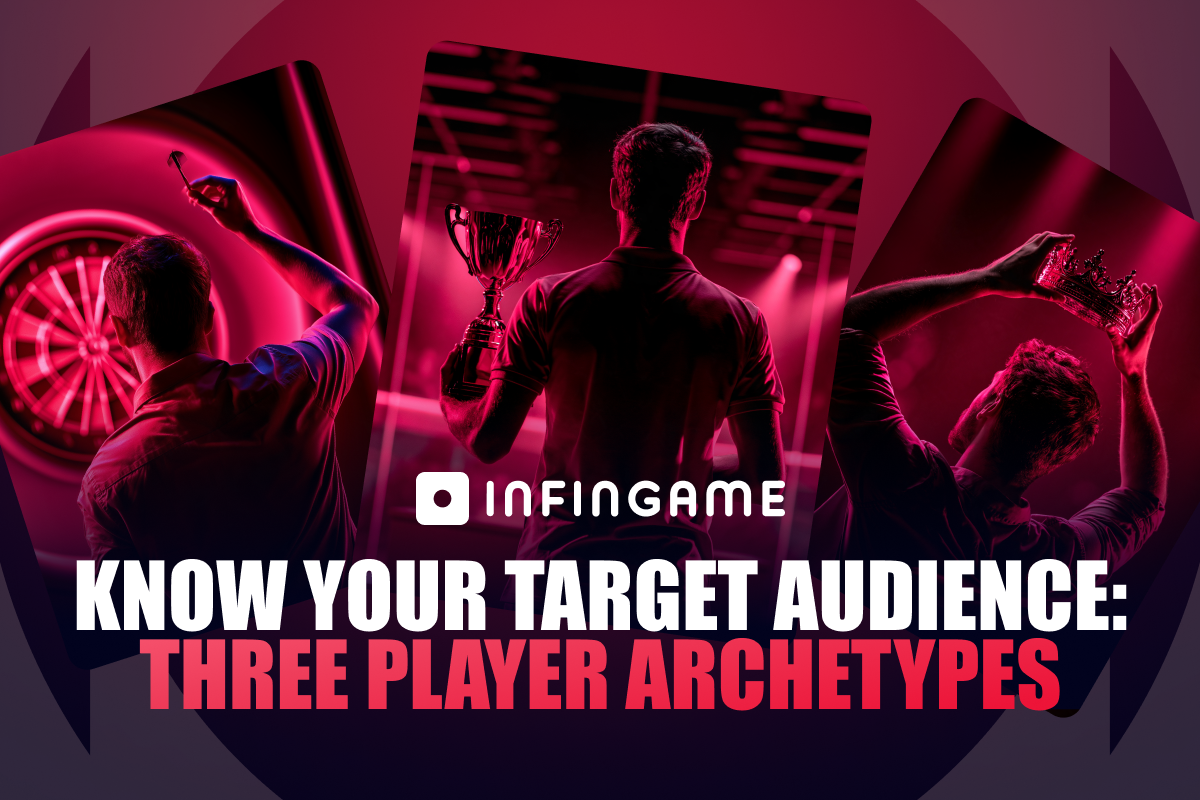
These differences are central to how we approach casino player engagement. By examining behavioural patterns across our aggregation and engagement ecosystem, we have identified three recurring motivational archetypes: the Achiever, the Competitor and the Thrill-Seeker.
Each represents a different reason for participating in promotional activity and corresponds to a particular engagement mechanic: Challenges, Tournaments and Jackpot Chance.
Understanding these motivations gives casino operators a more practical foundation for designing promotions, interpreting campaign performance and developing player engagement strategies that extend beyond generic bonuses.
Why player motivation matters in online casino engagement
Casino promotions have traditionally been organised around incentives: the size of a reward, the number of free spins, the value of a prize pool or the duration of an offer. These factors influence participation, but they do not fully explain why a particular campaign appeals to one player and fails to attract another.
Two players can receive exactly the same promotional offer and respond in completely different ways. The difference may have little to do with the monetary value of the reward. Instead, it may reflect what each player finds engaging about the experience.
For some, the appeal comes from working towards an achievable goal. Others enjoy the social dimension of competition, particularly when their results are visible and comparable. Another group responds to anticipation and the possibility of an unexpected outcome. This distinction becomes increasingly important as operators expand their promotional calendars.
An operator running several campaigns simultaneously may generate substantial participation without necessarily understanding which mechanics influence player behaviour. If every campaign relies on a similar incentive, increasing promotional frequency may produce diminishing returns.
A more effective approach starts by identifying the behaviour an operator wants to encourage and selecting the engagement mechanic most likely to support it. Our three-archetype framework offers a way to make that connection.
The Achiever: turning casino activity into measurable progress
The Achiever is motivated by objectives, progress and completion.
This player responds to a structured experience in which actions contribute towards a clearly defined result. The satisfaction comes from knowing what needs to be accomplished, seeing progress and eventually reaching the target.
Unlike competitive players, Achievers do not necessarily need to compare their performance with anyone else. Their primary reference point is the objective itself.
In an online casino environment, this motivation can be activated through tasks such as completing a specified number of spins, reaching a target number of wins or participating in selected games.
How Challenges support achievement-driven engagement
Infingame's Challenges mechanic introduces mission-based gamification into existing casino content.
Operators can create campaigns around specific player actions, configure completion requirements, determine eligible games, establish campaign durations and assign rewards.
A Challenge might encourage players to explore a newly introduced slot collection, complete a series of predefined objectives or participate in a promotional activity during a quieter operating period.
The underlying engagement process is straightforward: objective, progress, completion, reward.
Each stage gives the player a reason to continue interacting with the campaign.
The visibility of progress is particularly important. A player who has completed most of an objective has a clear understanding of what remains to be done, making the promotional experience more structured than a conventional bonus offer.
For operators, this structure also creates opportunities to analyse how players respond at different stages of a campaign.
Where achievement-based campaigns can add value
Challenges can support several commercial and operational objectives.
Content discovery. Operators can introduce players to selected games or providers by incorporating them into mission-based campaigns. This creates an additional reason to explore the casino catalogue without modifying the underlying games.
Player activation. Clear, accessible objectives can provide an entry point for players who have not previously interacted with gamification features.
Repeat engagement. A sequence of missions can encourage players to return to complete new objectives, although the impact should be measured against their previous activity.
Campaign targeting. Operators can adjust task difficulty, rewards and eligibility to reflect the characteristics of different player segments.
The effectiveness of these campaigns depends heavily on how objectives are designed.
A mission that is too easy may reward activity that would have occurred regardless of the promotion. An objective that requires excessive effort may discourage completion. The relationship between difficulty, reward and player behaviour therefore needs continuous evaluation.
The Competitor: when casino engagement becomes a shared experience
The Competitor is motivated by relative performance.
For these players, engagement becomes more interesting when results can be compared with those of other participants. Rankings, leaderboard movement and the opportunity to improve a position introduce a competitive dimension that individual rewards cannot provide.
Competition also changes how players perceive their own activity. A result is no longer evaluated exclusively in isolation. Its significance depends partly on how it compares with the performance of others. This is where casino tournaments become particularly relevant.
How Tournaments create competitive engagement
Infingame's Tournaments mechanic allows operators to introduce structured competitions across casino content, using configurable scoring systems, campaign durations and leaderboards.
Different tournament formats can encourage different patterns of participation. For example, operators can configure competitions based on betting activity, winning activity, multipliers, the highest multiplier achieved or the highest win, depending on the desired campaign structure.
The choice of scoring model matters because it determines what participants are competing to achieve.
A tournament based on accumulated activity creates a different competitive experience from one focused on a single high-ranking result. Similarly, a short campaign may produce different participation patterns from a competition running over several days.
Real-time leaderboards add another element: visibility. Players can see how their performance compares with others and whether their position changes during the competition. This introduces a continuing point of reference throughout the campaign.
Using competition strategically
Tournaments can be adapted to different stages of the player lifecycle and different promotional objectives.
An operator might use a short tournament to create a concentrated promotional event, introduce a competition around selected content or develop recurring events that become familiar to regular participants.
Segmentation is important here: a highly competitive player may respond positively to a demanding leaderboard, while a less active participant could find the same format inaccessible. Operators can address these differences through campaign eligibility, scoring structures and tournament design.
Competition should also remain understandable. If the scoring model is difficult to follow or the leaderboard offers little meaningful feedback, the motivational value of the mechanic can weaken.
The Thrill-Seeker: anticipation as an ongoing engagement mechanic
The third archetype responds to anticipation.
The Thrill-Seeker is attracted to the possibility of an exceptional outcome occurring during an otherwise familiar gaming session.
Unlike the Achiever, this player does not require a defined sequence of tasks. Unlike the Competitor, they do not need to outperform other participants. The engagement trigger is the possibility that an upcoming round could produce a jackpot event.
This motivation is particularly relevant to jackpot mechanics, where anticipation can exist alongside the underlying casino game.
How Jackpot Chance introduces an additional engagement layer
Infingame developed Jackpot Chance as a self-funded jackpot solution that operates above existing casino content.
Rather than restricting jackpot participation to titles from a single game provider, the mechanic can operate across more than thousands games from many providers, including slots and live casino content.
Players can opt in through an additional contribution per round, which funds the jackpot pool independently of the underlying game.
The system supports four jackpot tiers: Mini, Minor, Major and Grand. Different contribution levels allow players to select their level of participation. Jackpot Chance supports 1x, 2x and 10x contribution options, with the contribution level linked proportionally to the player's jackpot-winning chances.
The mechanic can be configured for local or network jackpots, allowing operators to determine the scale and structure of their campaigns.
For players, the principal difference is that jackpot participation can accompany activity across multiple eligible games rather than requiring them to move to a particular jackpot-enabled title.
For operators, this creates opportunities to introduce a consistent promotional experience across a broader portion of the casino portfolio.
What early Jackpot Chance data reveals
Initial live campaign results provide useful evidence of how players interact with this form of engagement.
Across observed client campaigns, average jackpot participation has reached 25% of casino bets.
The more revealing finding concerns continued participation. 68% of players who joined Jackpot Chance during the first month were still opted in and active by month eight.
This is an important distinction. Initial participation can reflect curiosity about a newly introduced feature, while continued opt-in activity suggests that the mechanic has maintained relevance for a substantial proportion of its early participants.
The results indicate that jackpot anticipation can potentially function as a persistent engagement layer rather than being limited to a short promotional launch period.
However, these figures should be understood as observations from client campaigns rather than universal benchmarks for the casino industry.
Why casino players cannot be divided into three permanent categories
The Achiever, Competitor and Thrill-Seeker are useful behavioural models, but they should not be treated as fixed player identities. The same person may respond to different motivations depending on the circumstances.
A player could participate in a Challenge to explore a new game, join a Tournament during a special promotional event and opt into Jackpot Chance during a regular gaming session.
Their behaviour may also change over time. Game preferences, previous promotional experiences, available rewards, lifecycle stage and campaign design can all influence which mechanic becomes relevant.
This means the archetypes are most useful when operators treat them as patterns of behaviour rather than permanent CRM labels.
A player who repeatedly completes Challenges is demonstrating an interest in achievement-based activity. That does not mean they will never respond to competitive or jackpot mechanics. Similarly, a player who frequently participates in tournaments may also engage with missions when the objectives align with their interests.
The practical goal is to recognise these signals and use them to improve future campaign decisions.
As Dmytro Kryvorchuk, COO at Infingame, explains:
"The mistake is assuming that engagement is one behaviour and that one mechanic can address the entire player base. A leaderboard, a Challenge and a jackpot may all increase activity, but they do it for completely different reasons. Once operators understand the reason behind the response, they can make much better decisions about which mechanic to use, for whom and at what point in the player journey."
From player archetypes to behavioural segmentation
Traditional casino segmentation often relies on factors such as deposit history, wagering activity, game preferences, player value and lifecycle stage.
These remain important inputs for CRM and promotional planning. However, they do not necessarily explain what motivates a player to participate in a particular campaign. Behavioural segmentation adds another dimension. Instead of relying exclusively on what players have done commercially, operators can examine how they respond to different engagement mechanics.
Consider a player who regularly participates in promotional campaigns but rarely completes missions. The issue may not be a lack of interest in promotions. It could be that the available objectives do not match the player's preferred type of engagement. Another player may demonstrate consistent participation in tournaments but show little interest in conventional bonus campaigns. Their behaviour suggests that competitive formats may be more relevant than additional generic incentives. A third player might maintain regular jackpot participation without interacting with either missions or leaderboards. These patterns can help operators make more informed decisions about which campaigns to prioritise for different audiences.
Building a more responsive promotional strategy
A practical behavioural segmentation process can begin with three questions.
1. Which engagement mechanics does the player actually use?
Operators can examine participation history across Challenges, Tournaments and jackpots to identify recurring patterns.
2. How does the player behave within each mechanic?
Completing a Challenge, registering for a Tournament and remaining opted into a jackpot represent different forms of engagement. Each should be evaluated through the metrics most relevant to that mechanic.
3. Does the behaviour continue beyond the campaign?
Changes in session frequency, return activity and subsequent participation help operators understand whether a promotion is associated with a lasting change in engagement.
These insights can then inform campaign selection, targeting and optimisation.
The result is not necessarily a more complicated promotional calendar. In some cases, it may mean running fewer campaigns while making each one more relevant to its intended audience.
Matching engagement mechanics to the player journey
Player motivation is only one part of effective promotional planning. Timing and context also influence how players respond. An operator introducing new casino content may prioritise discovery-oriented Challenges. A recurring promotional event may benefit from a Tournament that gives returning participants a familiar competitive format. Jackpot Chance can provide an optional engagement layer across eligible games without requiring a separate mission or leaderboard.
These approaches can also coexist. For example, an operator launching a new collection of games could introduce Challenges that encourage exploration, organise a Tournament around selected titles and make Jackpot Chance available across eligible content. Each mechanic would serve a different purpose within the same promotional environment.
The challenge is ensuring that the campaigns complement one another rather than compete unnecessarily for player attention. This requires coordination between CRM, product, marketing and analytics teams, particularly when several mechanics operate simultaneously. It also requires appropriate controls around campaign eligibility, rewards, frequency and responsible gambling.
Promotional relevance should not be confused with encouraging unlimited activity. Operators need to evaluate engagement within responsible gambling frameworks, including player-set limits and applicable market requirements.
What the three archetypes mean for the future of casino gamification
The development of casino gamification is increasingly connected to the ability to understand player behaviour rather than simply introduce additional promotional features.
Operators already have access to a wide range of engagement tools. The more difficult task is determining which mechanics are relevant to different players, how they should be configured and whether they deliver the intended results.
The Achiever, Competitor and Thrill-Seeker framework offers a practical way to approach those decisions. It recognises that achievement, competition and anticipation are different motivations, even when they ultimately contribute to similar commercial objectives. It also encourages operators to look beyond campaign-level performance and examine how engagement patterns develop over time.
A player who consistently responds to Challenges provides a useful behavioural signal. So does a player who returns for competitive events or maintains jackpot participation across multiple months.
The value comes from connecting these signals to future decisions rather than allowing them to remain isolated within separate promotional reports.
For Infingame, the broader opportunity is to help operators make better use of their existing content and engagement infrastructure through mechanics that address different motivations.
The objective is not to identify one universally effective casino promotion. It is to understand why different players engage and use that knowledge to create more relevant, measurable and sustainable promotional experiences.