17/03/2026
2 min to read

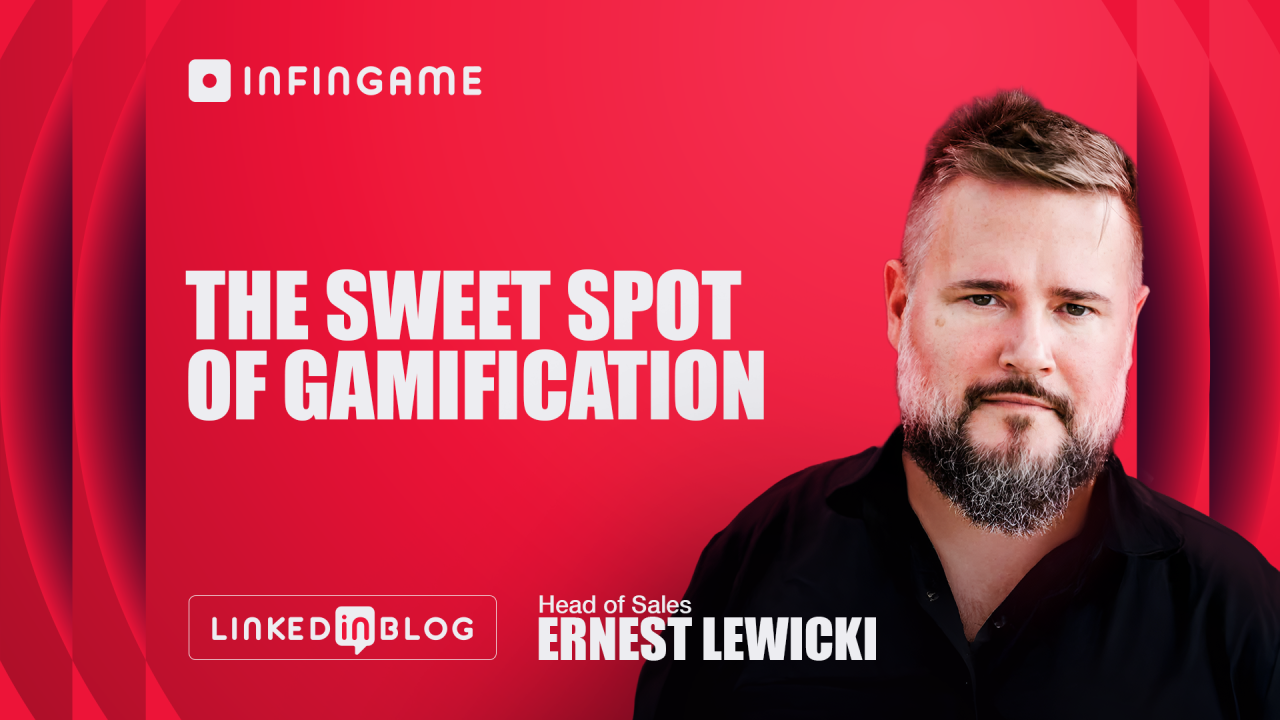
Gamification has become one of the industry’s favourite talking points, though its results have been anything but consistent. For years, it’s been the promised answer to player engagement, retention, and acquisition. But somewhere along the way, we’ve started to experience what I like to call “gamification fatigue”.
The idea itself still holds weight. Adding layers of interaction and competition to gameplay works. But too many operators have treated it as a bolt-on feature, something to tick off the list rather than to build with intent. The result is predictable. Cluttered experiences, players overwhelmed with pop-ups, and mechanics that distract instead of entertain.
At Infingame, we look at gamification differently. For us, it’s not a flashy feature or marketing tool. It’s a framework for engagement, one that, when used properly, makes every moment of play feel purposeful.
Gamification can be one of the most effective tools for engagement, but only when it’s built on a clear understanding of why it exists. Players don’t want to feel like they’re working through a dashboard of tasks to enjoy a slot. They just want to have fun.
The biggest mistake operators make is mistaking more for better. Adding layers of points, badges, leaderboards, and challenges doesn’t automatically equal engagement. If anything, it can push players away.
Good gamification doesn’t shout for attention. It’s almost invisible and a natural part of the experience that enhances what’s already there. When done right, players don’t see a mechanic; they feel momentum. They feel progress. They feel entertained. We know how this works and we focus on building tools that add value rather than noise.
We’ve learned that the key to sustainable engagement is balance. Gamification has to fit within the flow of play, not interrupt it. For us, that balance comes down to three things: personalisation, progression, and seamless integration.
Personalisation is the foundation. Operators need to know what drives their audience. That insight shapes every mechanic. A sports bettor might respond to free bets or match-based challenges, while a slots player might be more motivated by free spins or jackpot chases. There’s no one-size-fits-all solution, and that’s where data plays such a crucial role.
Progression is the motivator. Every action should move the player forward. Whether it’s a small reward for completing a task or climbing the leaderboard in a tournament, each step should build towards something that feels worthwhile. That sense of progress is what keeps players coming back.
Seamlessness is the glue. The moment a gamification mechanic pulls the player out of the experience, it fails. Features need to blend into gameplay, not sit on top of it. The best gamification feels like a natural extension of the game itself.
Our own suite of gamification tools, including Challenges, Happy Hours and Tournaments, were built with these principles in mind.
Challenges allow operators to reward simple player actions with small, meaningful prizes. Players might be asked to complete a number of spins, hit a certain multiplier, or reach a milestone. It’s straightforward, engaging, and flexible enough to fit any game or market.
Tournaments turn play into shared excitement. Real-time competition brings players together, creating moments of community that are hard to replicate elsewhere. Whether it’s a daily race or a leaderboard marathon, the format builds energy and loyalty.
Happy Hours, on the other hand, add pace and urgency. They create short, high-impact bursts of activity that keep players logging in and operators hitting engagement peaks throughout the day.
These features perform especially well across Latin America, where social gaming, competition, and community are deeply rooted in player culture. In markets like Brazil, we’ve seen how well-crafted gamification not only boosts engagement – but also creates experiences that resonate far beyond the screen.
Gamification should never compete with the game itself. It’s not about reinventing the experience, it’s about refining it. The temptation to over-engineer experiences is understandable, but it often backfires. Players remember how a game makes them feel, not how many side features it has.
Respecting the game means understanding what drives players to return. It means designing with intent and resisting the urge to overload the experience. At Infingame, we make every decision with one question in mind: does this make the game better for the player? If the answer is yes, then we know we are building something that lasts.
When applied with care, gamification is far more than a temporary boost in metrics. It becomes a strategic advantage that enhances player loyalty, extends session times, and deepens the relationship between operator and player.
The future of iGaming is not about who can add the most features. It is about who can use them best. Gamification done well adds depth, emotion, and longevity to the experience. Done poorly, it risks turning excitement into noise.
At Infingame | Game Aggregator , we have found that sweet spot, where innovation meets restraint and engagement meets entertainment. When gamification works, it is not a gimmick or a headline feature. It is a bridge between fun and loyalty. For us, this is where the true value lives.
The future of iGaming belongs to those who understand that engagement is an experience, not a feature. Connect with me to see how Infingame’s tailored gamification tools can make that experience count.
Discover how Infingame’s casino games aggregator accelerates growth for operators and studios. Share a few details, and the team will provide a tailored overview of integrations, promo tools and commercial options.